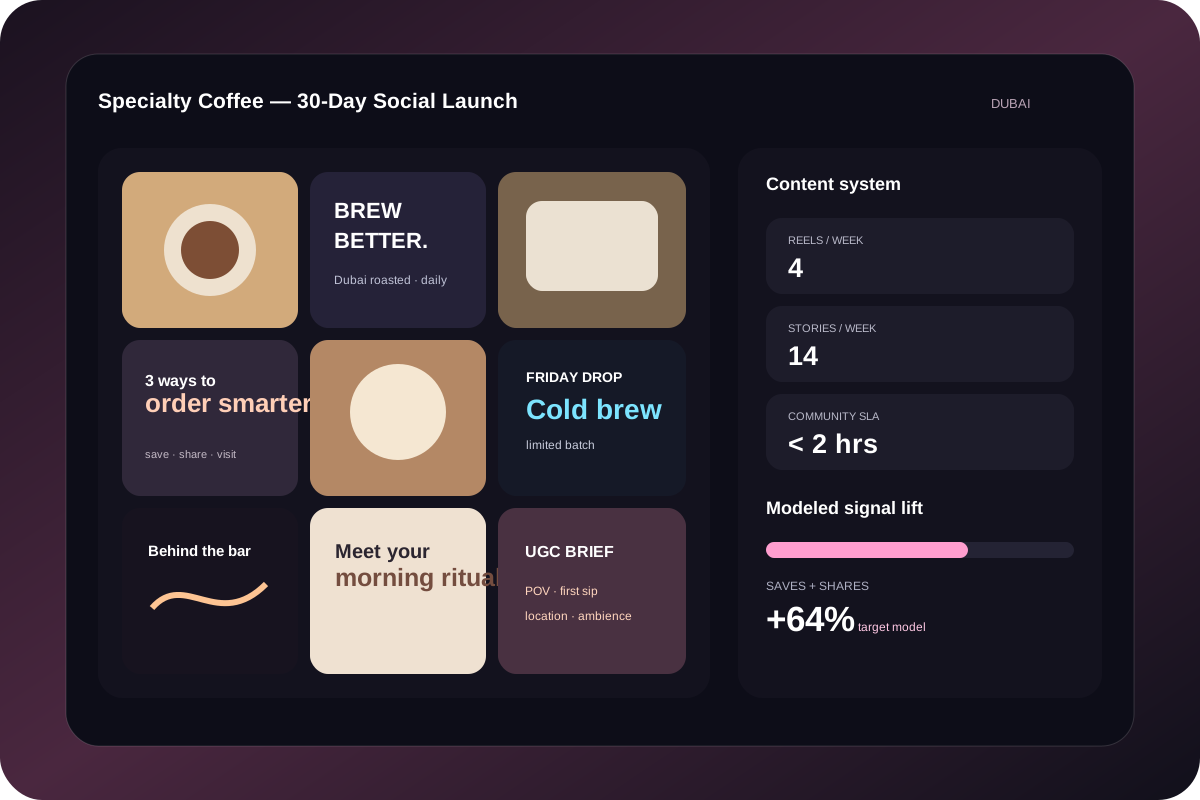
This is an original Qintora portfolio project. It is designed to show the level of strategy, implementation detail and deliverables a client can expect. Where percentages are shown, they are explicitly modeled targets rather than claimed client results.
The brief
This portfolio scenario is designed around a Dubai specialty coffee concept opening in a competitive neighborhood. The objective is local discovery and repeatable content production — not generic follower growth. The system needs to create reasons to save, share, visit and return.
Content signals we designed around
The content plan balances product desire, location cues, behind-the-bar credibility, founder or barista personality, UGC-style moments and recurring weekly formats. Community management rules prioritize questions about location, parking, menu items, timings and reservations because those interactions are closest to real visits.
What the social operating system includes
The 30-day launch pack contains four reels per week, daily story prompts, a nine-tile launch grid, creator briefs, response templates, a shoot list, caption frameworks, Google Maps/location tagging guidance and a lightweight reporting sheet focused on high-intent signals.
- 30-day launch calendar with recurring content pillars
- Reel scripts, story prompts and shot list
- Nine-tile launch grid and UGC creator briefs
- Community reply library and escalation rules
- Local-intent reporting template
Measurement model
Reporting prioritizes saves, shares, profile actions, direction taps, website/WhatsApp taps, branded searches and UGC volume. Reach is still tracked, but it is interpreted in the context of actions that suggest local purchase intent.
Modeled outcome
The showcase model targets a 64% lift in saves and shares versus a basic promotional posting pattern, plus a community-response SLA under two hours during operating periods. These are planning targets used to illustrate the system, not claims about a real cafe client.
How this becomes real execution
For a live launch we would build the calendar around actual menu strengths, location, offers, shoot access and opening milestones. The first two weeks would be used to identify the strongest creative hooks, then the calendar would shift toward the formats that create the most local-intent actions.