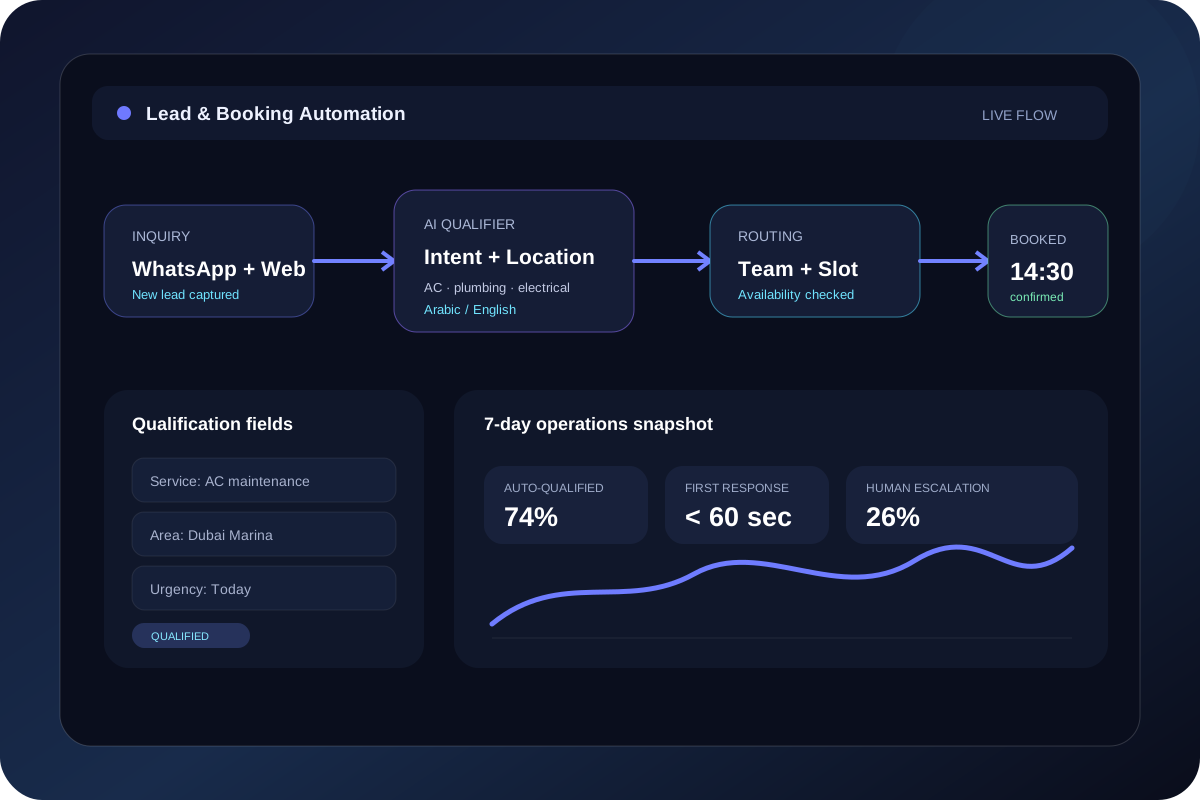
This is an original Qintora portfolio project. It is designed to show the level of strategy, implementation detail and deliverables a client can expect. Where percentages are shown, they are explicitly modeled targets rather than claimed client results.
The brief
This portfolio build uses a realistic Dubai home-services scenario: a maintenance operator receiving AC, plumbing and electrical inquiries through WhatsApp, website forms and paid campaigns. The operational problem is fragmented intake — agents repeatedly ask for service type, location, urgency and preferred time before a booking can even be created.
Signals we designed around
The workflow assumes a mixed lead pool with urgent requests, price shoppers, out-of-area inquiries and repeat customers. The agent first captures the service category and community, then checks service-area rules, asks the minimum qualification questions and routes the conversation to either a booking path, a quote-review path or a human specialist.
What the portfolio implementation includes
The build is deliberately specific enough to show how Qintora would execute a live automation engagement, rather than stopping at a chatbot mockup.
- Conversation map with service-area and urgency rules
- Lead object + CRM field mapping
- Booking / quote-review routing logic
- Human escalation and failure paths
- Operations dashboard event specification
Measurement model
The dashboard tracks first-response time, qualification completion, human escalations, bookings created, no-slot cases and drop-off by conversation step. A live deployment would compare these metrics against a pre-launch baseline and keep business outcomes separate from automation activity metrics.
Modeled outcome
Using a representative lead-volume model, the workflow is designed toward roughly 74% automated qualification, first response in under one minute and approximately 11 staff hours per week returned from repetitive intake. These are modeled targets for this showcase, not results from a claimed client account.
How this becomes a live client project
For a real business we would replace all assumptions with actual service areas, calendars, technician capacity, pricing rules, CRM fields, escalation policies and approved bilingual copy. The automation would launch behind a controlled pilot, then expand after error-rate and booking-quality checks.